Millet information
Tiny in size but mighty in nutrition, millets are among the oldest cereal grains cultivated by humans. These small-seeded grains belong to the grass family (Poaceae) and are annual warm-season crops widely grown across Asia and Africa. Today, they are once again gaining popularity as a healthy and sustainable food choice.
Millets are a diverse group of nutritious cereals that include Finger millet (Ragi), Pearl millet (Bajra), Sorghum (Jowar), Foxtail millet, Proso millet, Little millet, Barnyard millet, and Kodo millet. As people become more health-conscious, millets are gaining popularity because they are naturally rich in protein, dietary fibre, vitamins, and essential minerals, making them an excellent choice for a healthy diet.
Why Should You Include Millets in Your Diet?
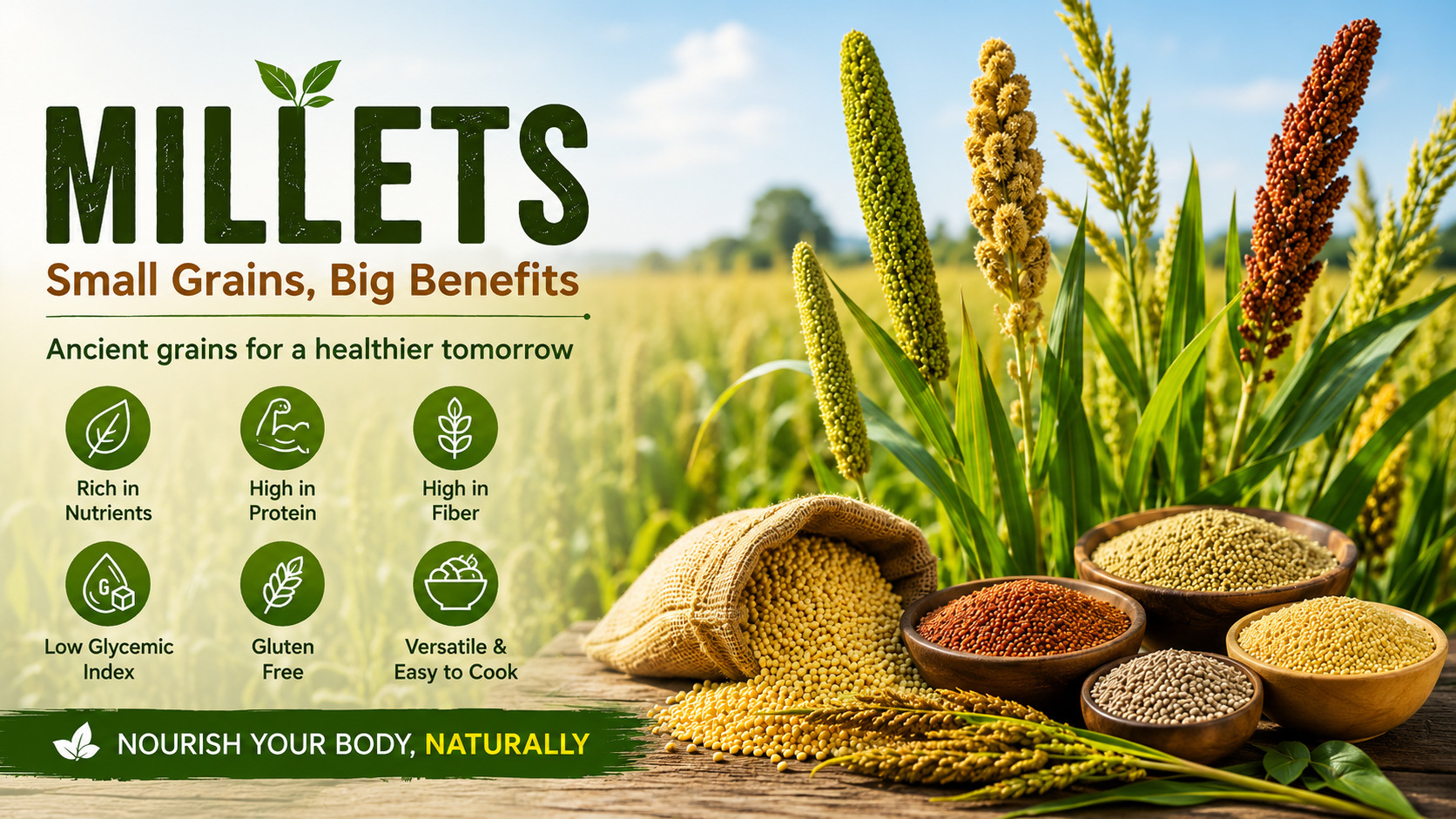
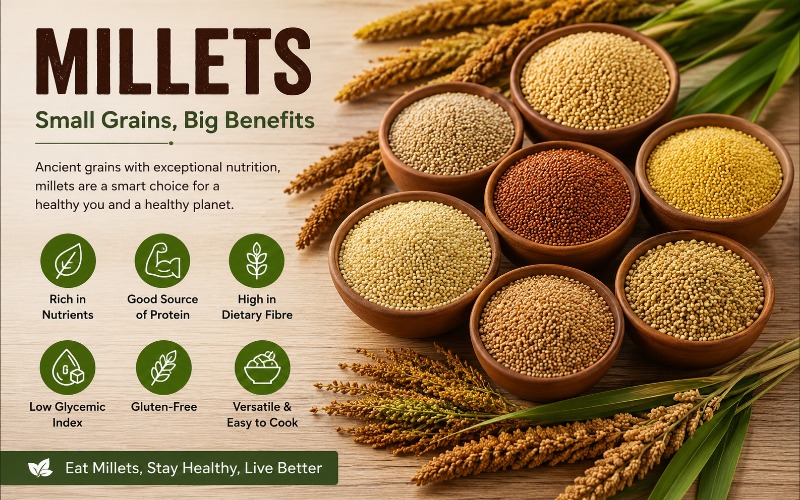
- Rich in Nutrients: Millets are packed with carbohydrates, protein, dietary fibre, B vitamins, and essential minerals like iron, calcium, magnesium, phosphorus, and zinc.
- High in Protein: The protein in millets supports muscle growth, tissue repair, and the normal functioning of the body.
- Rich in Fiber: Their high fibre content promotes healthy digestion and helps keep you feeling full for longer.
- Low Glycemic Index: Millets release glucose slowly into the bloodstream, helping maintain stable blood sugar levels and supporting diabetes management.
- Gluten-Free: Millets are an excellent alternative to wheat for people following a gluten-free diet.
- Versatile and Easy to Use: From rotis and porridge to dosa, snacks, and bakery products, millets can be enjoyed in a wide variety of tasty recipes.
How Can You Include Millets in Your Diet?
Millets are versatile grains that can be incorporated into everyday meals in many different ways. They are available as whole grains, millet flour, flakes, ready-to-cook mixes, breakfast products, and millet-based snacks.
Some simple ways to include millets in your diet include:
- Millet flour: Use millet flour to prepare rotis, pancakes, dosa, and other baked or cooked foods.
- Porridge: Cook millets as a nutritious breakfast or snack.
- Dosa and idli: Millet-based dosa and idli are popular alternatives to traditional cereal-based preparations.
- Millet snacks: Puffed millets, roasted millet products, cookies, and other snacks can be used as convenient food options.
- Breakfast foods: Millet flakes and ready-to-cook millet mixes can be used for quick breakfast preparations.
- Bakery products: Millet flour can be incorporated into biscuits, breads, cakes, and other bakery products.
The choice of millet and preparation method can be varied according to taste, dietary preferences, and the type of meal.
Millet information
Types of millets and their nutritional importance
Every millet has something special to offer. Whether it’s calcium-rich finger millet, iron-rich pearl millet, or fibre-rich sorghum, each variety contributes to a healthy and balanced diet. Let’s explore the most common types of millets and their key nutritional benefits.
🌾Sorghum (Jowar): Sorghum is a fibre-rich millet that provides protein, calcium, and essential minerals. Its starch-rich grains make it an excellent source of energy while supporting digestive health.
🌾Pearl Millet (Bajra): Pearl millet is packed with iron (crucial role in oxygen transport in blood), magnesium (important for nerve function, blood sugar regulation, and bone health), phosphorus (important for bone health) and zinc (important for immune function, wound healing).
🌾Finger Millet (Ragi): Finger millet is also a good source of iron, fibre and other micronutrients. Known as the calcium powerhouse, finger millet is excellent for strong bones and teeth. It also provides iron, dietary fibre, and several essential micronutrients, making it a great choice for people who avoid dairy products.
🌾Kodo Millet: Kodo millet is rich in dietary fibre and antioxidants. Its low glycaemic index makes it a good option for digestive health and blood sugar management.
🌾Proso Millet: Proso millet is a good source of protein, magnesium, phosphorus, and iron. It helps support energy production, muscle function, and overall well-being.
🌾Foxtail Millet: Foxtail millet is rich in magnesium, phosphorus, and iron. It is also high in dietary fibre, making it a nutritious choice for a balanced diet.
🌾Little Millet: Despite its tiny size, little millet is rich in fibre, iron, and essential minerals.
🌾Barnyard Millet: Barnyard millet is a good source of protein and dietary fibre. Carbohydrate content of barnyard millet is low and slowly digestible. Barnyard millet is effective in reducing blood glucose.
From supporting better digestion to providing essential nutrients, millets truly deserve a place on every plate. These ancient grains are making a modern comeback, proving that healthy eating can also be simple, delicious, and sustainable.
Read: Millets: The Nutri-Cereals You Need for a Healthier Lifestyle